Which of the Following Would Generate Cost-push Inflation
Some events then occur that generate cost-push inflation. An increase in the quantity of money.
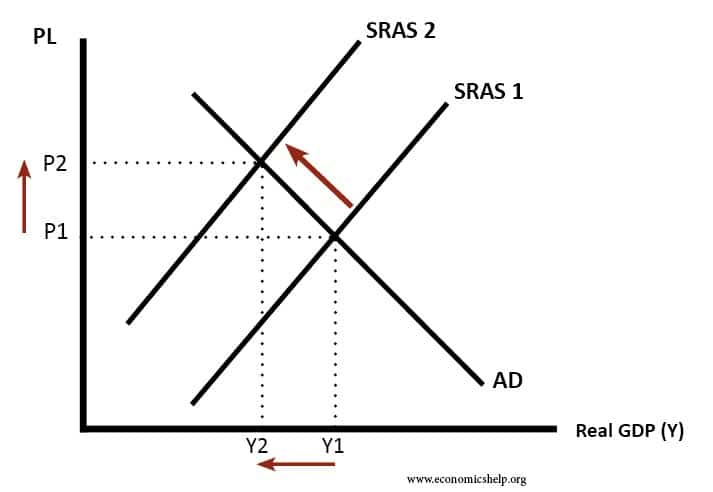
Cost Push Inflation Economics Help
An increase in the money wage rate or firms raise prices C.
. Since the demand for goods hasnt changed the price increases from production are passed. A decrease in government expenditure a decrease in exports. The economy starts out at full-employment equilibrium.
Which is the most direct cause of cost-push inflation. B b Increase in indirect taxation. B An increase in the money wage rate or an increase in the money prices of raw materials.
Demand-pull inflation is factor 4 inflation increased demand for goods which can have many causes. A inflation caused by decreases in aggregate supply that generate an even larger decrease in aggregate demand. 0 A an increase in the money wage rate or firms raise prices O B.
Two major oil shocks occurred in the United States during the. These components of supply are also part of the four factors of production. D d Increase in non-plan expenditure.
This is the increase in the profit margin by the firms working under monopolistic or oligopolistic conditions and as a result charging higher prices from the consumers. Some events then occur that generate cost-push inflation. Which of the following would generate cost-push inflation.
Cost-push inflation The economy starts out at full-employment equilibrium. D A decrease in exports. Which of the following events might cause cost-push inflation.
Shortages or cost increases in labor raw materials and capital goods create cost-push inflation. Oil shocks like this one we just heard about lead to cost-push inflation. Cost-push inflation is inflation caused by rising prices of inputs that cause factor 2 decreased supply of goods inflation.
Which of the following events might cause cost-push inflation. Besides the increase in wages of labour without any increase in its productivity there is another factor responsible for cost-push inflation. Cost-push inflation is associated with rising prices and declining unemployment.
An overreaction in labor capital goods and raw materials or inflation is due to shortages or increases in labor raw materials and capital goods. Cost-push inflation The economy starts out at full-employment equilibrium. In the supply of good or service changes the demand for it remains the same thus triggering cost-push inflation.
Occasionally it occurs after a monopoly has been established wages increase natural disasters occur legislation is introduced or exchange rates fall. Some events then occur that generate a cost-push inflation. Which one of the following statement regarding cost-push inflation is correct 1 cost-push inflation can be combated by restricting consumption spending 2 the fight against cost-push inflation inevitably leads to higher unemployment 3 cot-push inflation always has a positive impact on production and employment in the economy 4 stagflation is synonymous.
It has been widely argued in the USA and several other western countries that the growth of trade unionism in them and increases in money wages secured by unionised labour since the 1950s has been the main force push factor behind inflation that non-unionised labour has gained wage increases mainly as a consequence of wage increases in the unionised industry and that. Which of the following could contribute to cost-push inflation. A decrease in exports.
Some events then occur that generate cost-push inflation. Which of the following events might cause a cost-push inflation. A An increase in the quantity of money.
Demand-pull inflation is the increase in aggregate demand. B b Increase in indirect taxation. Which Of The Following Would Create Cost-Push Inflation.
Higher costs of production can decrease the aggregate supply the amount of total production in the economy. Which Of The Following Would Most Likely Result In Cost-Push Inflation. A An increase in the price of labor B A decrease in the price of energy C An increase in household consumption D A decrease in government spending E An increase in the money supply.
Greater demand for exports. C inflation caused by increases in aggregate demand that. A a Increase in money supply.
Cost-push inflation occurs when overall prices increase inflation due to increases in the cost of wages and raw materials. Attempts to decrease cost-push inflation by restrictive monetary or fiscal policy are likely to produce even greater unemployment. An increase in the money wage rate or firms raise prices.
Greater scarcity of natural resources o rising production costs increasing supply of goods and services reductions in wages Help please Ill make you the brainliest if right 2 See answers Advertisement Advertisement. An increase in consumption demand. C c Increase in population.
Cost-push inflation The economy starts out at full-employment equilibrium. C A decrease in government expenditure. Which of the following events might cause cost-push inflation.
Asked Jul 4 2016 in Economics by Gibbz. E An increase in taxes. In addition to these components there are four other factors influencing production.
Cost-push inflation is. Cost-push inflation is the decrease in the aggregate supply of goods and services stemming from an increase in the cost of production. An increase in the quantity.
Cost-push inflation and demand-pull inflation can both be explained using our four inflation factors. Key Takeaways Cost-push inflation occurs when the supply of a good or service changes but the demand for it stays the same. B inflation caused by increases in aggregate demand that are not matched by increases in aggregate supply.
Which of the following accounts for Cost-Push Inflation.
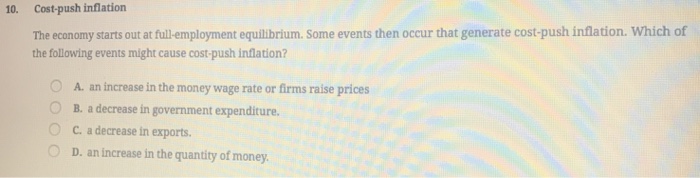
Solved 10 Cost Push Inflation The Economy Starts Out At Chegg Com

Cost Push Inflation Inflation Learn Economics
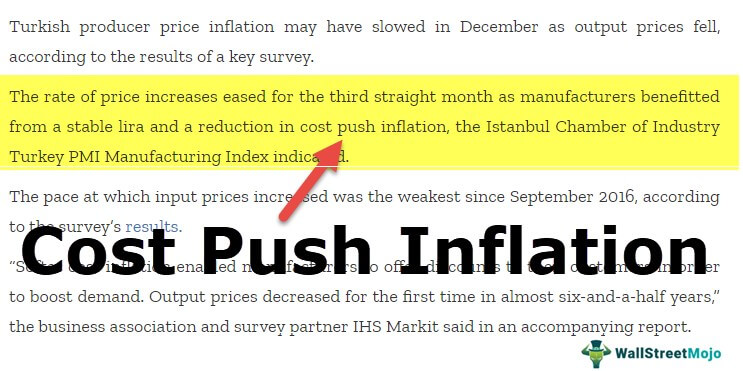
Cost Push Inflation Definition Effects Top Causes Of Cost Push Inflation


Comments
Post a Comment